

June 2024 Newsletter 
President's Letter

Dear Members, Colleagues, and Sponsors,
As my term on the board of directors comes to a close, I want to take this opportunity to express my sincere gratitude to our membership for granting me the privilege to serve on this board for the past six years. I am truly grateful for the collaboration, inspiration, and professional growth that I have experienced during my tenure.
Congratulations to both Rebecca Lubrano and Jonathan Sproul who have been elected to fill the vacancies on the board left by both Jeff Karam and myself terming out. Your passion for the field of structural engineering and your commitment to the advancement of our profession make you excellent additions to the board. I have full confidence in the leadership of the incoming board and I am excited to witness the innovative ideas and initiatives that will shape the future of our organization. Both Rebecca and Jonathan bring new energy and perspective to the board and join an incredible group of existing board members.
At our May meeting, we were able to celebrate some of the incredible achievements of our member firms through the SENH Excellence in Structural Engineering Awards Program. We had five entries this year. The high quality of the projects made our judging panel’s job very difficult. Congratulations to our 2024 SENH Excellence in Structural Engineering Award winners:
· Special Structures: Simpson Gumpertz & Heger – Great Lawn Pavilion

· Buildings: TFMoran, Inc. – Highrock Church

Our Professional Development Committee is hard at work trying to schedule some unique in-person site visits/shop tours over the summer – so please be sure to check your emails from SENH as more information will be provided soon.
In closing, I would like to wish everyone a happy and healthy summer – I hope you are all able to take some time to relax with family and friends. Although my time on the board has come to an end, I plan to stay actively involved – please do not hesitate to contact me directly if you have any questions or comments [email protected].
Tim Polson, PE
President, SENH
Announcements
Excellence in Structural Engineering Awards Nominees:
Awards Category: Special Structures
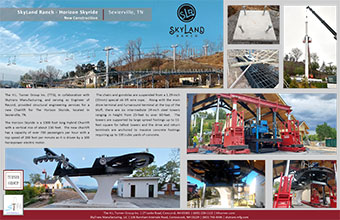
SkyLand Ranch - Horizon Skyride
The H.L. Turner Group
Project Location:
Sevierville, TN
Project Highlight:
The H.L. Turner Group Inc. (TTG), in collaboration with Skytrans Manufacturing, and service as Engineer of Record, provided Structural engineering services for a new Chairlift for the Horizon Skyride, located in Sevierville, TN.
The Horizon Skyride is a 1300 foot long hybrid chairlift with a vertical rise of about 150 feet. The new chairlift has a capacity of over 700 passengers per hour with a top speed of 200 feet per minute as it is driven by a 100-horsepower electric motor.
The chairs and gondolas are suspended from a 1.29-inch (33mm) special ski lift wire rope. Along with the main drive terminal and turnaround terminal at the top of the bluff, there are six intermediate 24-inch steel towers ranging in height from 25 feet to over 60 feet. The towers are supported by large spread footings up to 11 feet square for the tallest towers and the drive and return terminals are anchored to massive concrete footings requiring up to 100 cubic yards of concrete.
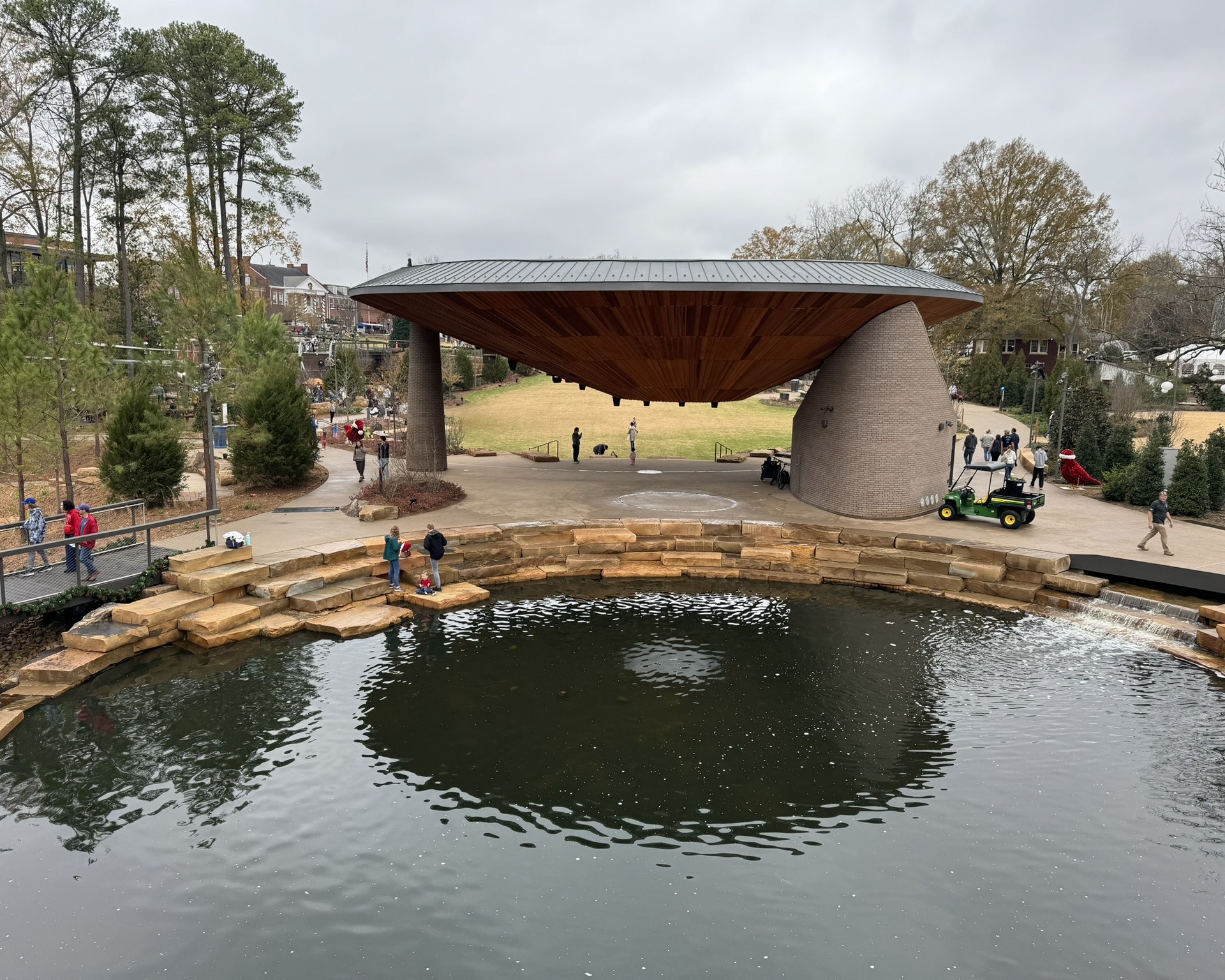
Great Lawn Pavillion
SGH
Project Location:
Cary, North Carolina
Project Highlight:
The Great Lawn Pavillion is located at the center of a six-acre park in downtown Cary, North Carolina. Completed in 2023, the pavilion now serves as the park's focal point and functions as a shaded gathering space and performance venue with a multi-purpose stage, concealed green room, and ceiling-suspended audio-visual equipment for concerts, shows and movies.
Awards Category: Buildings
Private Residence
Team Engineering
Project Location:
Newbury, New Hampshire
Project Highlight:
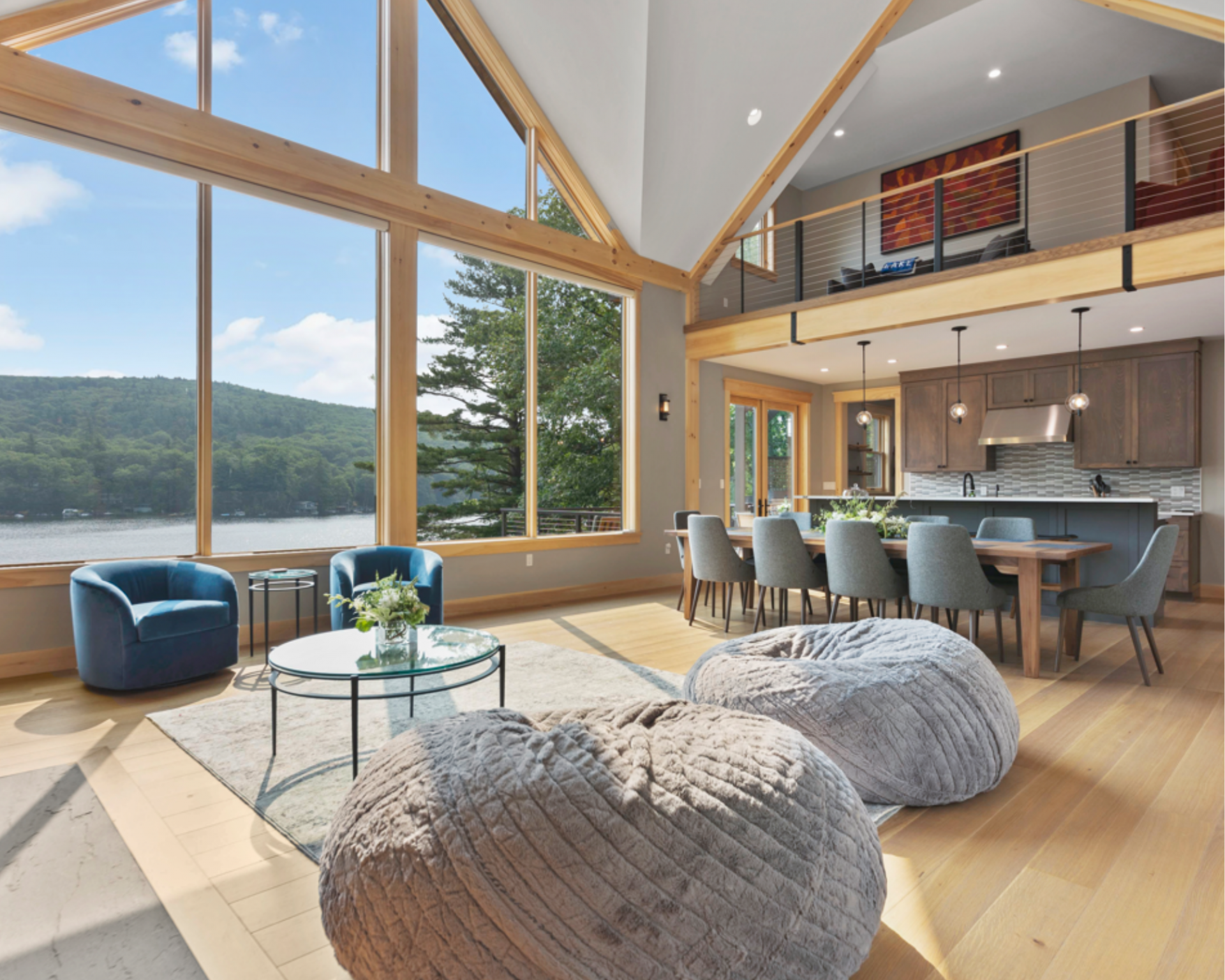
Team Engineering designed the new private residence on the west shore of Lake Sunapee in Newbury, New Hampshire. We are proud of this project for our creativity in designing a structure that accommodated the complicated architecture created.
The complex roof lines required ridges, hip and valley beams to achieve vaulted ceilings, a shed dormer, and open floor plans. The two-story great room includes a "picture wall" with lake views.
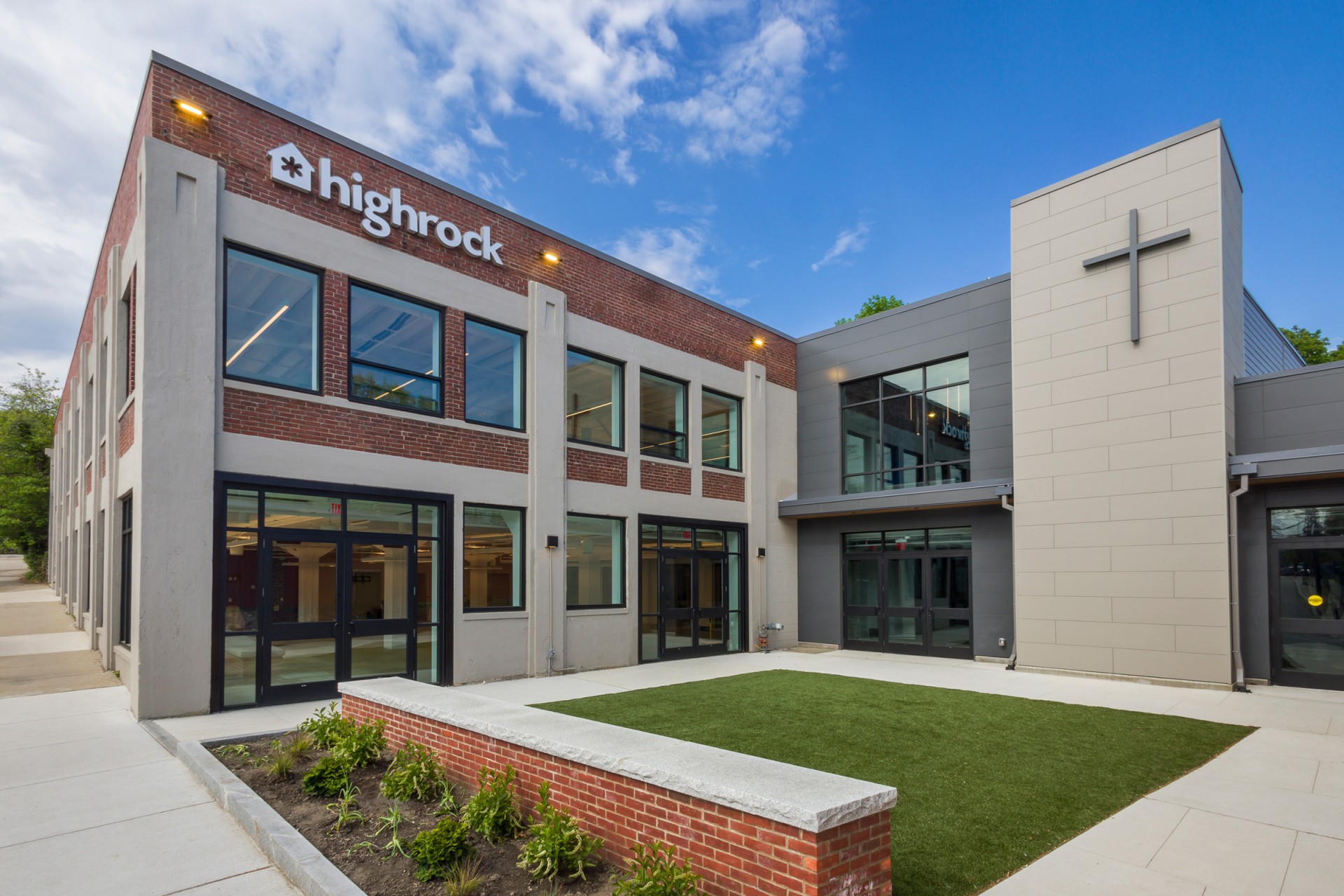
Highrock Church
TFMoran
Project Location:
Arlington, Massachusetts
Project Highlight:
TFMoran Structural Engineers provided structural design to repurpose a former industrial building into a worship and community center for Highrock Church. Located in Arlington, MA, the existing building (c. 1900) originally built for manufacturing purposes, was most recently used for auto repair and parts warehousing. The project includes 19,700sf of worship and support spaces. Historic facades at the Great of the building were preserved, while replacing the roof structure and retrofitting foundations for a more functional, open worship space. Repairs were also made to the existing concrete structure. A new lobby addition provides accessibility and connection to an adjacent church property.
Calendar of Events
SAVE THE DATE!
Wednesday, July 17th, mid-afternoon: SL Chasse Steel fabrication plant tour in Hudson, NH. Join fellow SENH members for a tour of SL Chasse's state-of-the-art steel fabrication plant. This will be followed by an early evening social event to be held at 603 Brewery in Londonderry, NH. Details will be provided in an official announcement in the coming weeks.
Articles
Artificial Intelligence: Ethical Uses in Civil Engineering
Submitted by: Sean Brown PE, & Allison Widdop S.M. ASCE
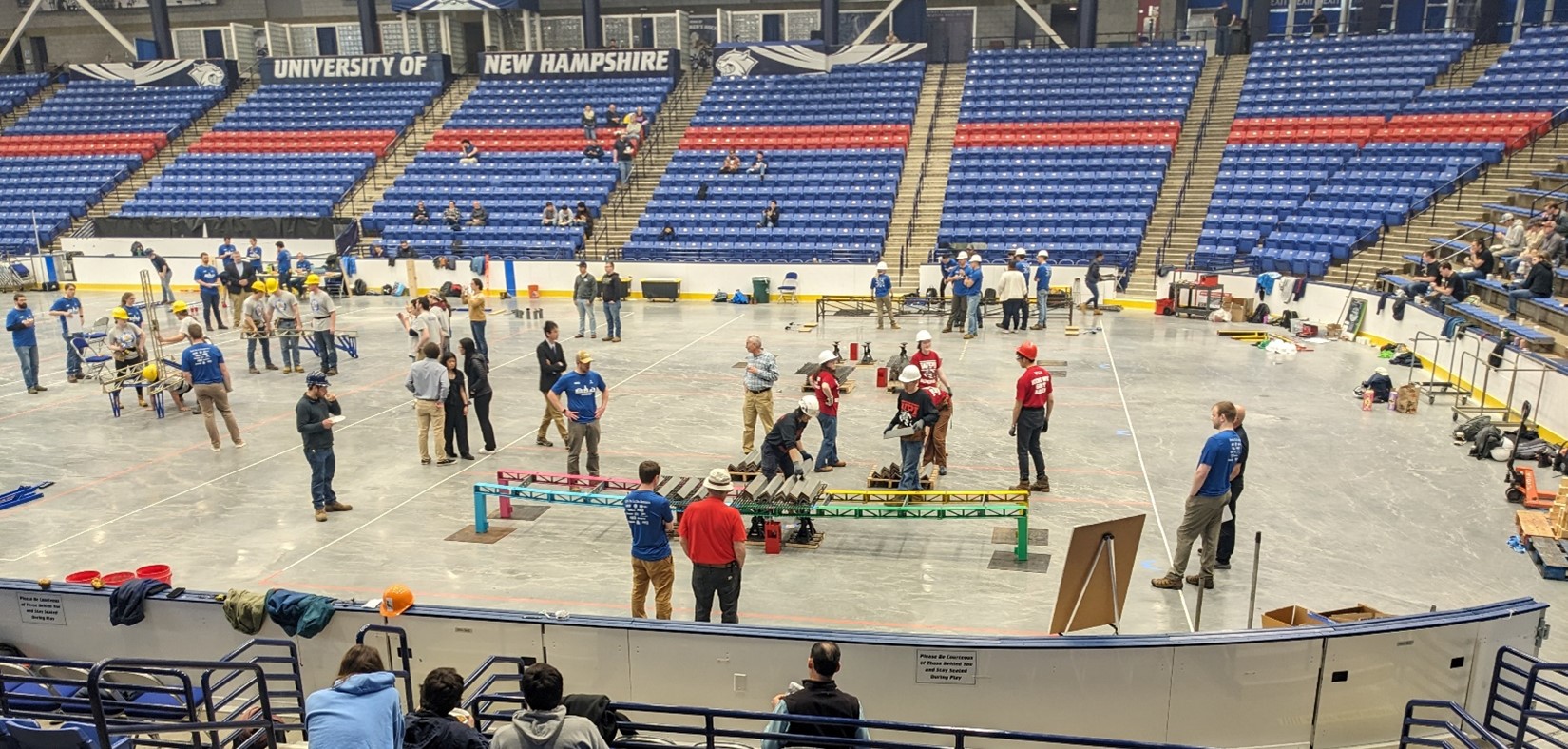
This year the University of New Hampshire hosted the Northeast Regional Student Symposium. This included several student competitions for steel bridge, concrete canoe, and the Mead Paper. The Mead Paper competition is organized by the host school, and this year's topic was ‘Discuss how engineers need to evaluate their ethical responsibilities as they determine whether or how to use AI to aid in their work’.
Amongst the responses that were submitted by 14 regional universities, one article written by a civil engineering student at UMass Lowell stood out for its deep insight and quality. After speaking with the author, Allison Widdop, she graciously agreed to share her response with the SENH membership in our next newsletter. With that said, I hope you find Allison’s perspective as interesting and intriguing as I did.
The Ethics of Artificial Intelligence Use Within Civil Engineering
By: Allison N. Widdop, S.M. ASCE
Civil engineering as a profession has had an incredible responsibility to protect and best serve the needs of both the built environment and the welfare of the public. Throughout history, civil engineering has adapted to changing technology such as the invention of calculators and the use of computer software. These technologies have greatly increased civil engineers' ability to create intricate solutions, especially to problems that arise with the growth of modern technology. As artificial intelligence (AI) develops and its use becomes more widespread, the civil engineering profession will adapt to it and continue to develop as it has over history. Technological change is inevitable and there are both positives and negatives to these advancements and how they impact the profession. With these changes, civil engineers must evaluate the benefits of technology along with the Code of Ethics to better understand how to utilize technology as a tool within their practice.
The American Society of Engineers Code of Ethics has been a model for professional conduct since 1914 and has been adapted over time to reflect the needs of society, the natural and built environment, the profession, clients and employers, and peers (ASCE). The ASCE Code of Ethics has gone through many iterations over a century and will continue to change as technology and the environment changes. The rapid advancement of technology and the use of AI poses a lot of questions within the profession, especially surrounding how the use aligns with an engineer's moral responsibility and the Code of Ethics. Again, as with any new technological development the use of AI should be considered and evaluated through the lens of the civil engineering profession. The benefits of AI should be considered on how it can be utilized as an important tool within civil engineering while also maintaining the ethics of the profession.
Assuming ethical and correct use, AI can have numerous benefits to civil engineers and help in advancing the profession. At the current stage of AI, it cannot replace the need for human civil engineers, but it can be used as a tool in engineering. For example, asking a person with no civil engineering background to solve a complex civil engineering problem would yield an incorrect answer, or they may not be able to solve it at all. But if the same person was taught the methods and how to solve complex engineering problems, they would be able to solve them. They may solve them incorrectly or not completely, but looking at their work and how they used the information given can provide insight into potential solutions for the problem. If this same person was taught more about civil engineering and how to solve complex problems, eventually they would be able to correctly solve the problems every time. Teaching AI to solve specific complex civil engineering problems will help it learn and understand what information is given and over time, it will be able to correctly solve problems and provide insight into solutions. Like calculators or design software, it is an excellent tool for solving civil engineering problems but does not eradicate the need for an engineer as engineers are the ones who utilize these tools.
Many parts of the Code of Ethics align with the use of AI and can be used to govern its use within the profession. With the correct use, AI has many benefits, however determining its correct use based on morals and ethics can highlight its downsides. The Code of Ethics states in its preamble that engineers must "consider the current and anticipated needs of society; and utilize their knowledge and skills to enhance the quality of life for humanity" (CITE). Part of considering the anticipated needs of society and using knowledge and skills to enhance quality of life is adapting to the use of AI and using it as a tool in a way that enhances the quality of life for the public and environment. It would be a disservice to the stakeholders to not use the knowledge of AI within the practice as well as not considering the needs of society as it shifts towards regular use of AI. However, the first part of the preamble emphasizes creating safe, resilient and sustainable infrastructure. The use of AI as a tool must align with this, or it is not considered ethical.
In deciding whether or how to use AI in their work, engineers must consider the ethical
the profession and society a disservice because technology and other engineering professions are
However, using AI incorrectly or without the utmost ethical purposes, the use of AI
benefit the profession but the incorrect, ignorant, or inattentive use of AI poses ethical concerns
Because AI uses machine learning, it does not always provide factual information and
Overall, the use of new technologies, specifically AI, within the civil engineering profession provides many benefits for not only the profession but also society. With these new
Committee Updates
Young Members Group
Submitted by Dustin Wells, Chair
2024 ASCE Northeast Student Symposium
The Young Members Group volunteered at the ASCE Student Symposium for the Steel Bridge and Concrete Canoe competitions. This year the Northeast Symposium was held at UNH. 13 teams competed in the Steel Bridge competition, with the top three winners shown in the table below for each category.
| Rank | Speed | Lightness | Stiffness | Cost Est. | Economy | Efficiency | Overall |
| 1 | University Laval | Western New England Univ. | University Laval | UConn | University Laval | University Laval | University Laval |
| 2 | UMass Amherst | UConn | Northeastern University | Northeastern University | UMass Amherst | UConn | UConn |
| 3 | UMaine | UMaine | UMass Amherst | UMass Amherst | Tufts University | Northeastern University | UMass Amherst |
For concrete canoe, the final rankings were as follows:
- University Laval
- ETS-Montreal
- Northeastern University
- University of Connecticut
- University of New Hampshire
- University of Massachusetts Lowell
- University of Massachusetts Amherst
- Worcester Polytechnic Institute
- University of New Haven
- Wentworth Institute of Technology
- Norwich University
Change of YMG Chair
Dustin Wells (Hardesty & Hanover) will be taking over the leadership of the Young Member Group starting in June. Dustin has been a member of SENH for 3 years, is an active member of ASCE, and was an active member of the UNH ASCE Student Chapter. Dustin graduated from UNH in December of 2023, and has been working at H&H as a structural designer since late January. When he's not in the office, you can find him hiking, skiing, golfing, or playing basketball, soccer, or tennis. Dustin's goal for the Younger Member Group is to meet and get to know members of the YMG as well as increase student involvement.
Upcoming Event
SENH YMG and ASCE YMG are planning a joint event at the Fisher Cats as the non-profits of the night for the game. The event is in its initial planning stages, but the tickets will be sold at a discounted price, and we will have the opportunity to run the 50/50 raffle, be recognized pregame, and for two individuals to throw the first pitch. The initial date for this is Friday, August 23rd. I will follow up with additional information/ways to pay once the event is finalized. Hope to see you there!
Last Meeting Attendance List & Meeting Minutes
March 19, 2024 Meeting
March 19, 2024, 5:30 PM @ Grill 28 / Peae Golf Course, Portsmouth, NH
Business Portion:
- President's Report - Tim Polson
- Thank you to the 2024 corporate organization sponsors: MiTek, NDC/VCS Engineering, TFMoran and SGH/
- At the May meeting we will vote on two new board members to replace Tim and Jeff, whose terms are expiring. The nomination Committee nominates Rebecca Lubrano (SGH) and Jonathan Sproul (Procon).
- Treasurer's Update - Kayla Hampe
- Approximately 25% of members have not yet renewed for 2024 - due January 1 - please renew!
- Due to the generosity of our membership, SENH awarded two $1,000 scholarships in February: The Arthur W. Rose Memorial Scholarship and the SENH YMG Scholarship.
- The web maintenance fee to Star Chapter is another significance YTD expense.
- Younger Member Group Update - Eric Caron
- The joint ski outing with SEAMass at Pat's Peak was cancelled due to poor weather/conditions.
- More members are wanted! Consider joining if you're under 35.
-
- New members are needed with the potential departure of two members joining the Board.
- Now accepting ideas for topics for the May meeting.Professional Development Committee Update
- March meeting trivia winners: Sean Brown and Derek Gilbert
Fiber-reinforced Polymer (FRP) and Fabric-Reinforced Cementitious Matrix (FRCM) Strengthening Solutions for Concrete and Masonry Structures - Jason Oakley, PE - Senior Field Engineer at Simpson Strong-Tie Co. Inc.
Applications for the strategy include:
- Increasing structural capacity of individual members and systems
- Repairing damaged and deteriorated members
- Seismic and wind capacity upgrades
- Bridges and buildings
List of Attendees:
| Name | Company | Notes |
| Daniel Martel, PE | Team Engineering | Secretary |
| Derek Gilbert | Simpson Strong-Tie | |
| Eric Caron | WSP USA, Inc | |
| Geoffrey Aleva | Civil Consultants | |
| Jason Oakley, PE | Simpson Strong-Tie | Speaker |
| Jeffrey Karam, PE | Evergreen Structural Engineering | Vice President |
| Johnathan Truebe, PE | Lakeside Engineering, Inc | |
| Josif Bicja, PE | Hoyle, Tanner & Associates | |
| Katelyn Welch, PE | Hoyle, Tanner & Associates | |
| Kayla Hampe, PE | Hoyle, Tanner & Associates | Treasurer |
| Lily Beyer, PE | Summit Engineering | |
| Mahreana Hopson | TFMoran, Inc. | |
| Michael Richard | Simpson, Gumpertz & Heger | |
| Rebecca Lubrano, PE | Simpson, Gumpertz & Heger | |
| Robert H. Durgee, PE | Dubois & King, Inc. | |
| Sean Brown, PE | Hardesty & Hanover | Director at Large |
| Thomas Lamb, PE | TFMoran, inc. | |
| Timothy Polson, PE | WSP USA, Inc. | President |
May 16, 2024 Meeting
May 16, 2024, 5:30 PM @ Puritan Conference Center, Manchester, NH
Minutes recorded by Dan Martel, Secretary
Business Portion:
- Election of New Board Members - President Tim Polson
- Secretary Dan Martel confirms quorum in attendance (20% of members, excluding associate, student, and retired)
- Rebecca Lubrano (SGH) and JJ Sproul (Procon) unanimously elected by membership.
- Dan Martel, on behalf of the Board and all of membership, thanks outgoing Board members Tim Polson and Jeff Karam for their outstanding service and leadership in their 6 years on the Board.
- Professional Development Committee Update - Katie Welch
- Next general meeting is in September, the annual joint meeting with ASCE. Technical topic is TBD.
- Tour of SL Chasse steel fabrication facility scheduled for July 17, with social hour following.
- Thanks for Rebecca and JJ, outgoing members, for their years of contributions.
- Seeking new members to contribute to the committee.
- Younger Member Group Update - Eric Caron
- A joint event with SEAMass is scheduled for June 2 (Sunday) - hike at Pawtuckaway State Park.
- Treasurer's Update - Kayla Hampe
- Year-to-date revenue and expenses largely as expected.
- To date we have fewer members and sponsors than 2023.
- 2024 Excellence in Structural Engineering Awards
- Thanks to all submitters.
- Thanks to jurors Derek Gilbert, Fenanda Fischer, Chris Fournier
- Winner in Buildings Category: TFMoran for Highrock Church (Arlington, MA)
- Winner in Special Structures Category: SGH for Great Lawn Pavillion (Cary, NC)
- No submission in the Bridge Category
- May meeting trivia winner: Eric Caron
2023 Sumner Tunnel Restoration Project Presentation - Joseph Rigney, PE, Principal at Delve Underground
Abstract: Originally constructed in the 1930s, the Sumner Tunnel is an essential underwater link connecting East Boston and downtown Boston. It's just over 1 mile long and 31 feet in diameter and at nearly 100 years of constant use was in dire need to repair and upgrading. The primary work of the restoration project includes repairing advanced deterioration at the tunnel crown with new precast arches that will add protection and strengthening. The restoration also consists of upgrading the tunnel systems, including permanently removing 75% of the existing exhaust duct suspended over the roadway to improve overall ventilation system capacity and performance.
Following the presentation, Joseph offered to arrange a tour of the Sumner Tunnel rehabilitation to SENH in the future.
List of Attendees:
| Name | Company | Notes |
| Benjamin Longchamp | Daigle Engineers | |
| Brian Barry | Chryso Admixtures | |
| Daniel Martel | Team Engineering | Secretary |
| Derek Gilbert | Simpson Strong-Tie | |
| Edward Weingartner, PE | Hoyle, Tanner & Associates | |
| Eric Caron | WSP USA, Inc. | |
| Fernanda Fischer | Hardesty and Hanover | |
| Fred Emanuel | Emanuel Engineering | |
| Holly Lauzon | Hoyle, Tanner & Associates | |
| Jacob Pouliot, PE | TFMoran, Inc. | |
| Jeffrey Karam, PE | Evergreen Structural Engineering | Vice President |
| Jonathan Sproul, PE | Procon | |
| Jonathan Longchamp, PE | Daigle Engineers | |
| Joseph Rigney, PE | Delve Underground | Speaker |
| Josif Bicja, PE | Hoyle, Tanner & Associates | |
| Katelyn Welch, PE | Hoyle, Tanner & Associates | |
| Kayla Hampe, PE | Hoyle, Tanner & Associates | Treasurer |
| Louis Cote, III | TFMoran, Inc. | |
| Mahreana Hopson, PE | TFMoran, Inc, | |
| Michael Richard | Simpson, Gumpertz & Heger | |
| Normand Cote, PE | NGC Structural, LLC | |
| Paul Lefebvre, PE | HDR, Inc. | |
| Rebecca Lubrano, PE | Simpson, Gumpertz & Heger | |
| Richard Driscoll, PE | Richard J. Driscoll Consulting | |
| Robert Champagne, PE, LEED | Summit Engineering | |
| Robert Durfee | Dubois & King | |
| Ryan McMullen, PE | Hoyle, Tanner & Associates | |
| Sean Brown | Hardesty & Hanover | Director at Large |
| Stephen Boyington, PE | HDR, Inc. | |
| Thomas Lamb, PE | TFMoran, Inc. | |
| Timothy Polson, PE | WSP, USA | President |
